Work
Things I’ve built. Client code stays private, so the open-source projects come with downloads and the rest with screenshots.
Try it live.
A public test server runs my plugins for real: StreakRewards, StaffPanel, Fortuna and ServerBridge in the lobby, and the ArenaNet network with Core Siege behind it. Join with a normal Java client. No whitelist, no registration, no cost.
demo.systemlukas.link
- 1.21.10
- Minecraft Java Edition (1.21.9 works too)
- 40
- players at most
- 2
- arenas at most, started and stopped by the queue
- 04:00
- nightly reset, Berlin time
What you can test
StreakRewards
Talk to the librarian in the lobby, then type /rewards. A reward day lasts five minutes in the demo (or type /demo nextday), so you can watch a streak grow within one visit.
StaffPanel
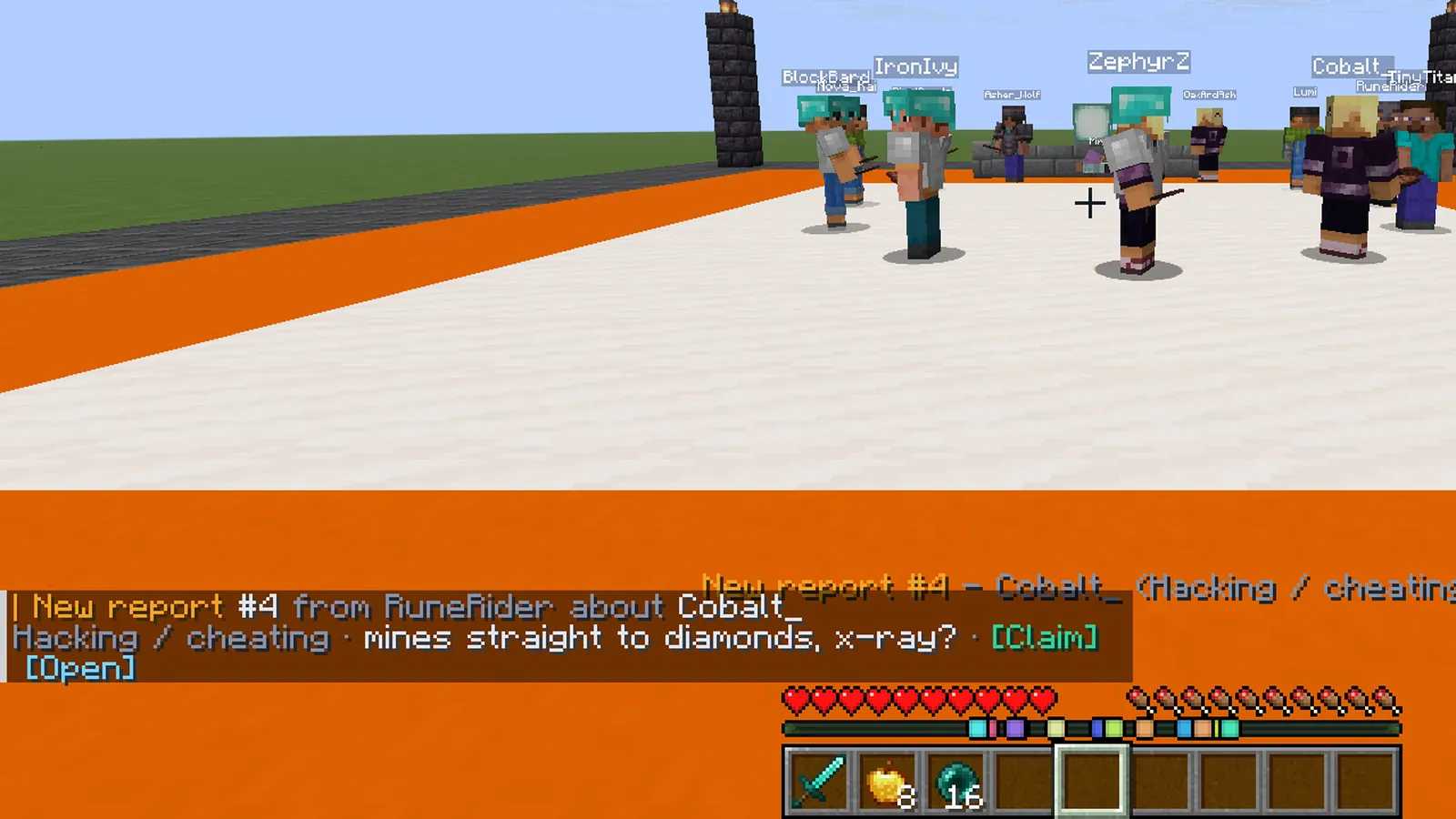
Type /panel in the lobby. The whole admin panel opens against made-up players: ban, freeze, look into inventories and work through reports without touching anyone real. A new report arrives after half a minute.
Fortuna
Type /crate free for a key, then right-click a crate in the lobby: a roulette, a wheel or an instant opening, and the odds of every reward on a left click. Buy tickets with /lottery for demo coins; a draw with the staged ceremony runs every ten minutes. Demo coins have no value and cannot be traded.
ServerBridge
The dashboard of this server is public and read-only: status, arenas, matches and rankings, live. It updates while you play.
ArenaNet and Core Siege
Walk into a coloured gate to join the queue. A match needs two players, so bring a friend or wait for another visitor. When the first arena is busy, the orchestrator starts a second one.
The lobby
Rankings above the plaza, a parkour at the west gate, a double jump and a party menu. Five guides explain each plugin and link to its page.
House rules
- Be friendly. No cheats or hacked clients, no spam, no advertising.
- The chat is filtered and rate limited and links are blocked. Only the demo commands work and no visitor has operator rights.
- Nothing can be built or broken in the lobby, and arenas are reset after every match.
- At most 40 players and 3 connections per address. You need a real Minecraft account, the server checks it with Mojang.
- Everything is test data and is deleted every night at 04:00 Berlin time. The server restarts then and is back within a few minutes.
Open the live dashboardLive arenasMatch history
It runs on a small shared machine of mine with a hard memory cap of about 6 GB, so it can be slow or restarted without notice. The Discord bot is switched off in this setup.
ArenaNet
A whole minigame network that starts with one command, tested with 40 bots playing real matches.
A Velocity proxy with Elo matchmaking and parties, a lobby, my own team game Core Siege, and an orchestrator that starts arena servers when the queue grows and removes them when it shrinks. Every result ends up in MariaDB, on a live dashboard, in Discord and in Grafana.
Java 21, Paper 1.21, Velocity 3, Redis, MariaDB, Docker, TypeScript, Prometheus and Grafana. MIT licence.
Lobby plaza with the glowing core monument, team arches, ranking holograms and the sidebar. Real client, demo data.
Mode selector with live numbers from Redis: players searching, players in matches and the estimated wait.
Rankings GUI with player heads, season and all-time peak Elo, read from MariaDB.
Core Siege, round start on Cinder Isles: scoreboard, core boss bars and the match title.
The relic altar in the middle of the map: the contested generator for Shards.
A team core with its health hologram on the island base, next to the shop terminal.
Shop terminal: blocks, weapons, armour, team upgrades. The tooltip shows the three resources.
End of a match: title, kill feed, result table and the Elo change from the stats service.
Tested on Paper 1.21.10 and Velocity 3.5.1. The images are real captures from a headless Minecraft client with demo data.
Hearthfall
A winter survival server where warmth is a resource, with its own world, resource pack and a control center. Not open source: licensing on request.
Players keep a warmth value up with clothing, fires and hot drinks while blizzards, cold snaps and aurora nights roll over a cold-skewed world. Hearthstones claim land, and the advent calendar, a gift exchange, a snowball fight and a New Year fireworks show turn the server into an event. Everything is edited in a web control center with versions, hot reload and rollback, and tested with more than 4,500 unit tests, 286 bot checks and 738 security checks.
Java 25, Paper 26.3, MariaDB, TypeScript, Fastify, React, Docker. Closed source, commercial.
Emberhold at dusk: the spawn chute runs down to the market square
The market square with every stall and lantern lit
A blizzard rolls in. The ember brazier is the only warm colour for a block in every direction
The frozen lake with its ring of lanterns, seen from the shore
The pier in daylight: the lanterns form a snowflake on the ice
Emberhold from above: lake, market, houses and the spawn chute
The village around the lake, built by hand on generated terrain
An aurora night: green and violet ribbons over the world
Fireworks over Emberhold on New Year’s Eve
A sled with a rider on the market square
The ember brazier’s fuel menu, drawn with the pack’s own GUI skin and title font
The advent calendar: opened doors are green, missed days can be claimed late
The snowball fight: round, score and hits left in the sidebar
The snowball arena at night with a power-up message
A snow golem companion with the aurora hat
Between the market stalls at dusk
Runs privately for friends. All images are real captures from a headless Minecraft 26.3 client. A guided tour is available on request.
StreakRewards
A daily reward calendar for Paper and Folia, free to use, with the full source.
Players claim something every day and build a streak; if they miss a day, the rules you set decide what happens. Rewards can be items, Vault money, XP or commands. Data goes to SQLite or MySQL, placeholders work through PlaceholderAPI, and the texts come in English and German.
Java 21, Paper 1.20.6 to 1.21.x, Folia, SQLite or MySQL. MIT licence.
Reward calendar with claimed days, today's reward and a tooltip showing the weekly jackpot.
Claim animation: a colour sweep runs around the frame while the reward is stored.
Claim feedback with title, chat message, items and a live PlaceholderAPI scoreboard.
Admin command /rewards info and PlaceholderAPI values next to the scoreboard.
Tested on Paper 1.20.6 and 1.21.10 and on Folia 1.21.8. Real in-game screenshots with demo data.
ServerBridge
Connects your Minecraft server to Discord and to a live web dashboard.
Three parts in one repository: a Paper plugin, a Discord bot with a two-way chat bridge, whitelist and account linking, and a web dashboard with Discord login, live status and leaderboards. Version 1.1 adds live arenas and Elo rankings for ArenaNet.
Java 21, Paper and Folia, TypeScript, discord.js, Fastify, SQLite or MariaDB, Docker. MIT licence.
Public status page, live over Server-Sent Events: players with heads, TPS, recent events and the top streaks. Demo data from the end-to-end run.
In game: /link creates a code, the Discord /link command links the account and the player is told right away.
The chat bridge in game: Discord messages arrive with a [Discord] prefix, formatting from Discord stays plain text.
Personal profile of a linked account: stats, daily streak from StreakRewards and link status.
Admin page for a Discord role: whitelist, recent link requests and an audit log of changes.
The dashboard on a phone: status, leaderboard and profile.
Real messages the bot posted in a Discord test server (fetched through the API and rendered, not a Discord screenshot): chat bridge, status message and event feed.
Tested on Paper 1.21.10 together with StreakRewards. The Discord image is rendered from messages the bot really posted in a test server, not a screenshot.
Backpacks+
Tiered, dyeable backpacks with upgrades for Fabric and NeoForge, open source and tested for item duplication.
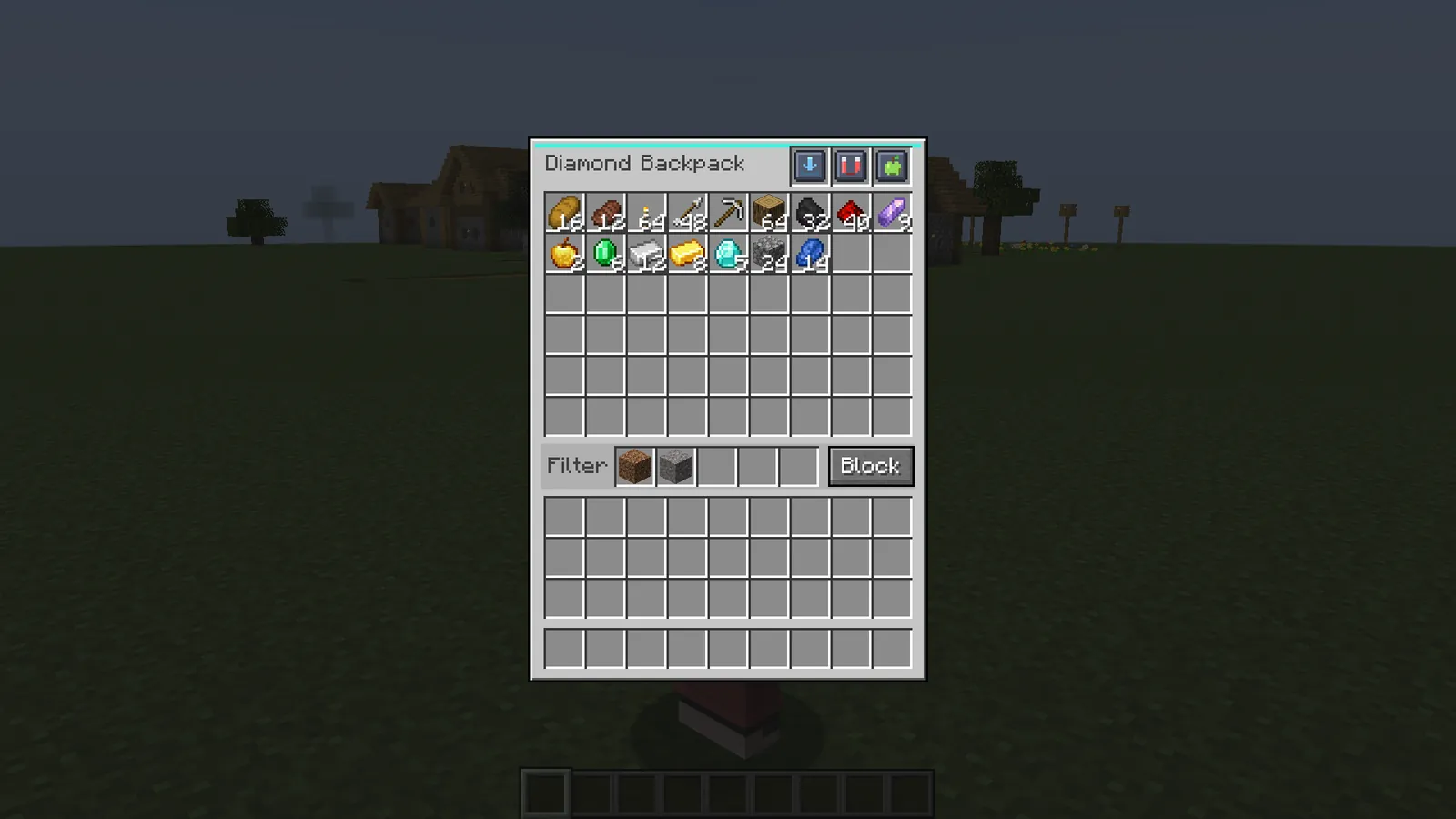
Five tiers from 18 to 72 slots, worn in the chest slot with a 3D model that takes the dye colour. Pickup (with allow and block list), Magnet and Feeding upgrades. The server owns every item: dropping, dying, disconnecting or opening twice cannot duplicate anything, and 28 GameTests on both loaders prove it.
Java 21, Minecraft 1.21.1, one codebase for Fabric and NeoForge, data generation, JUnit and GameTests. MIT licence.
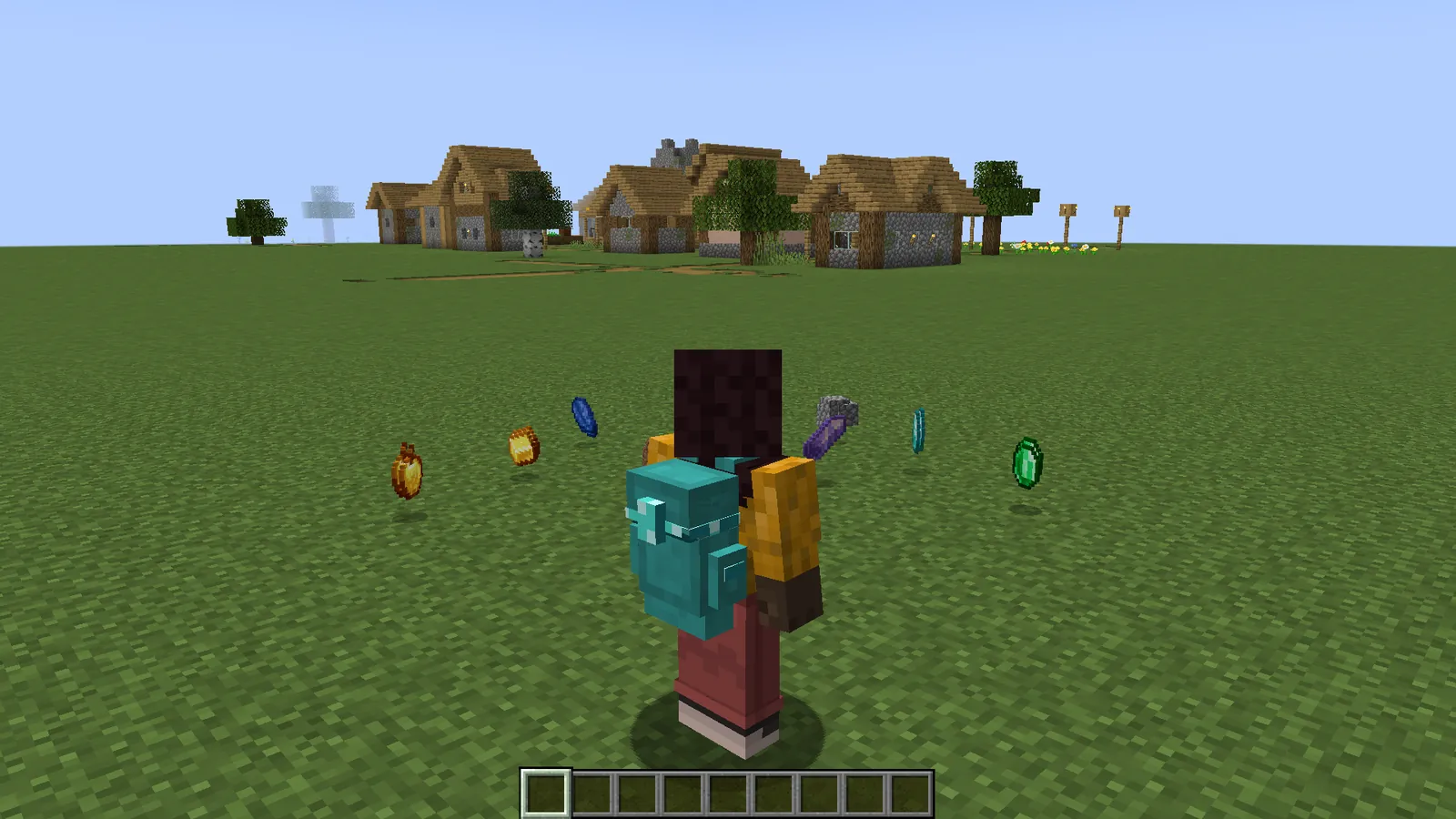
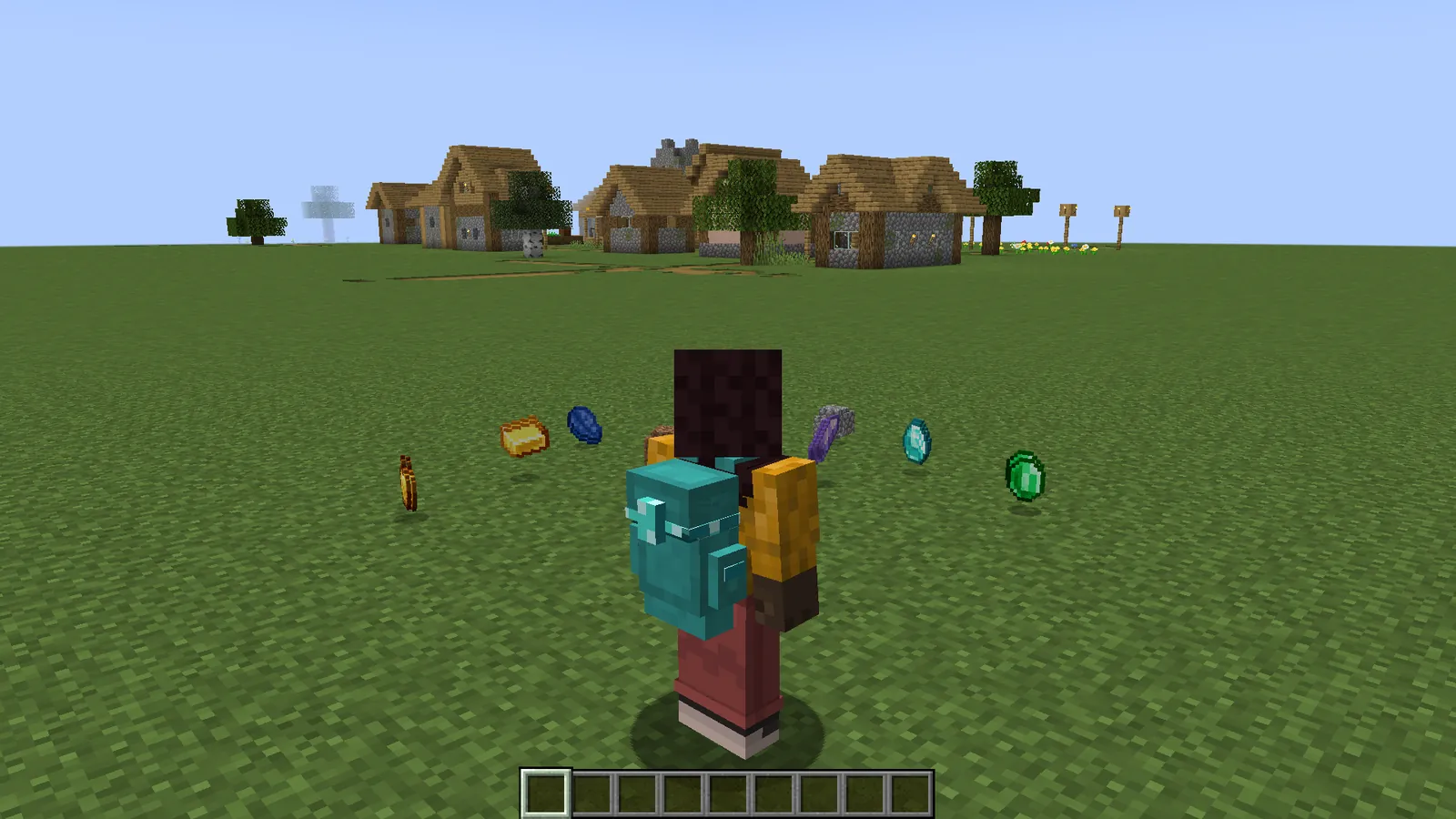
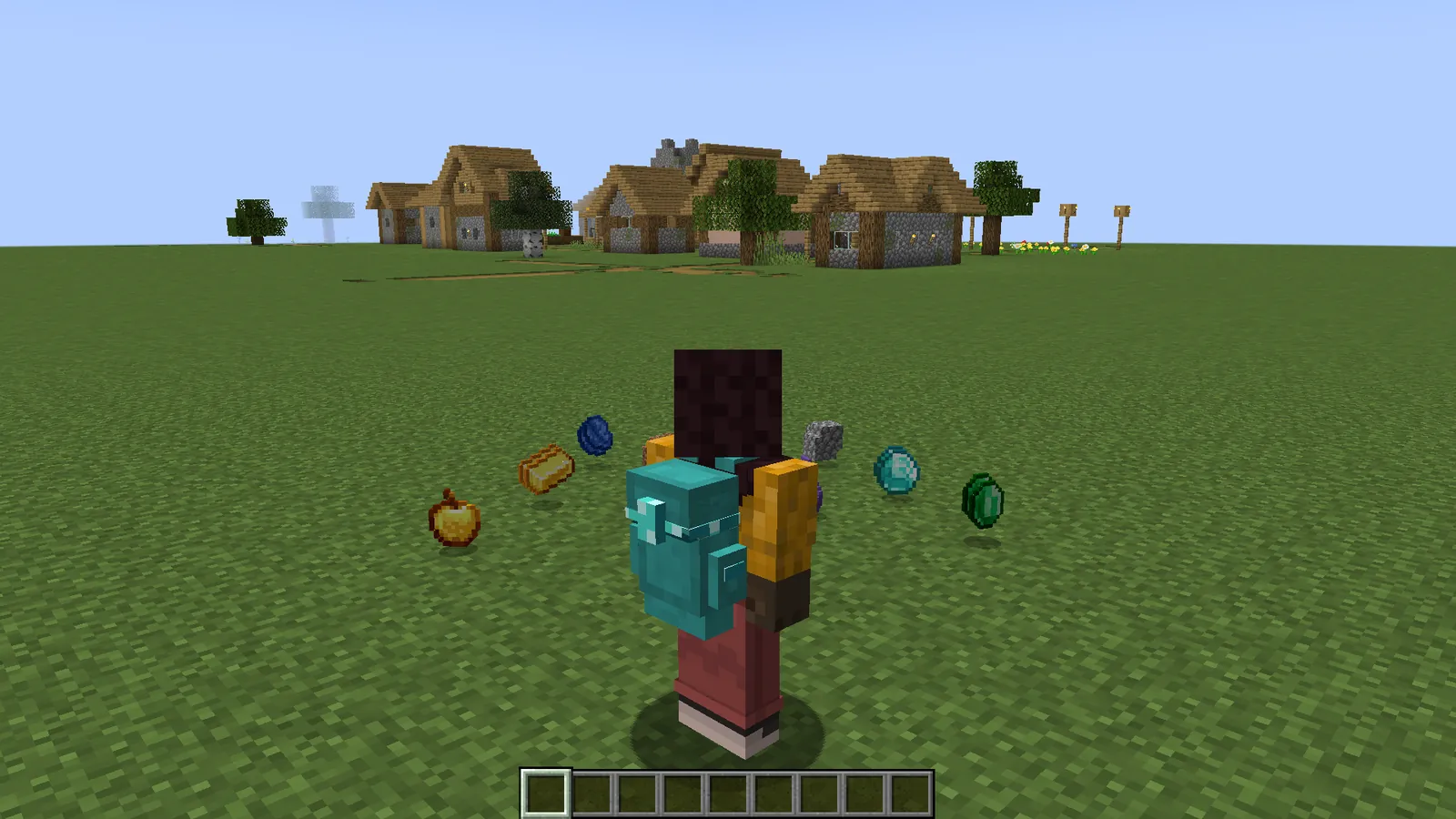
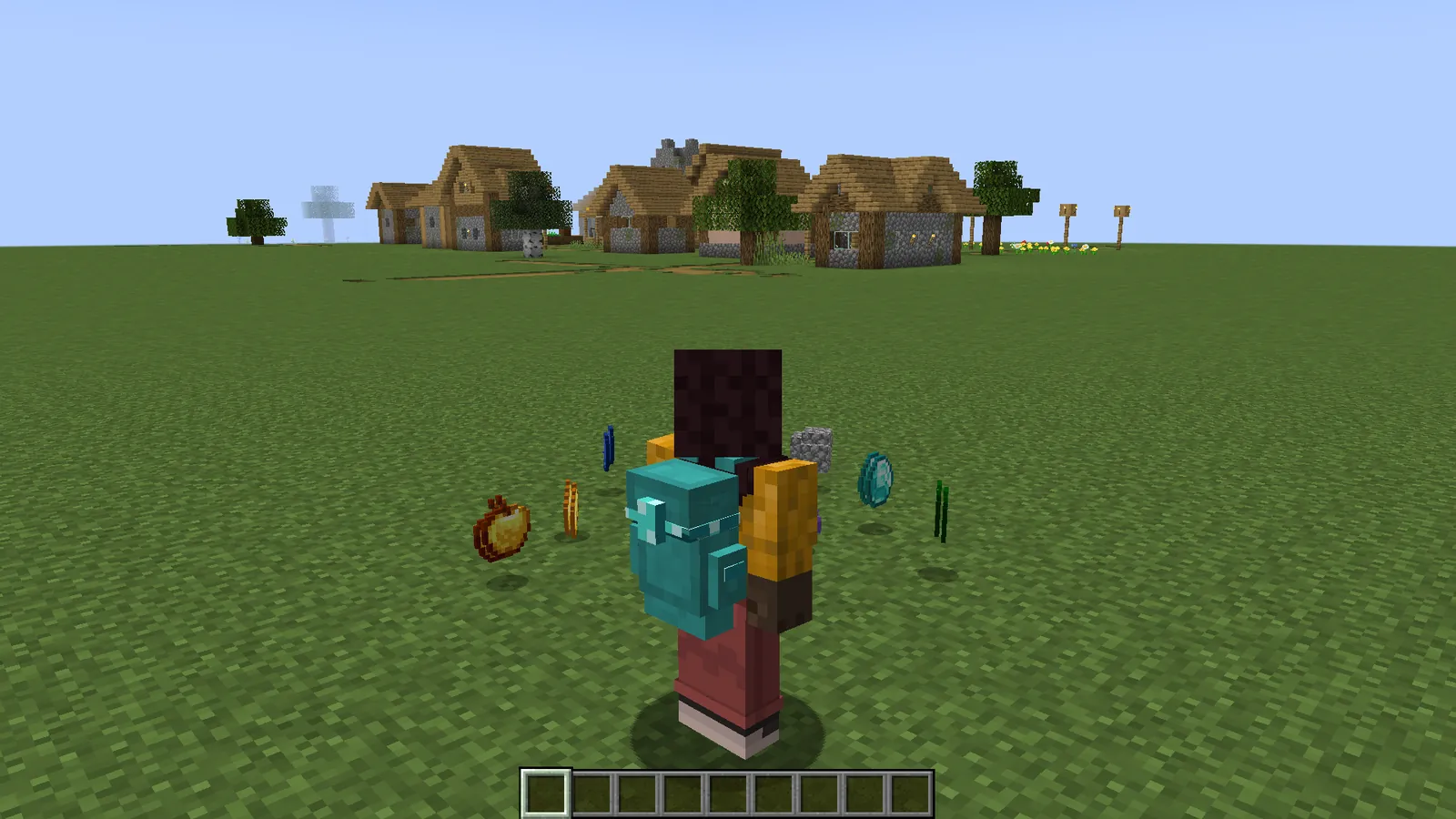
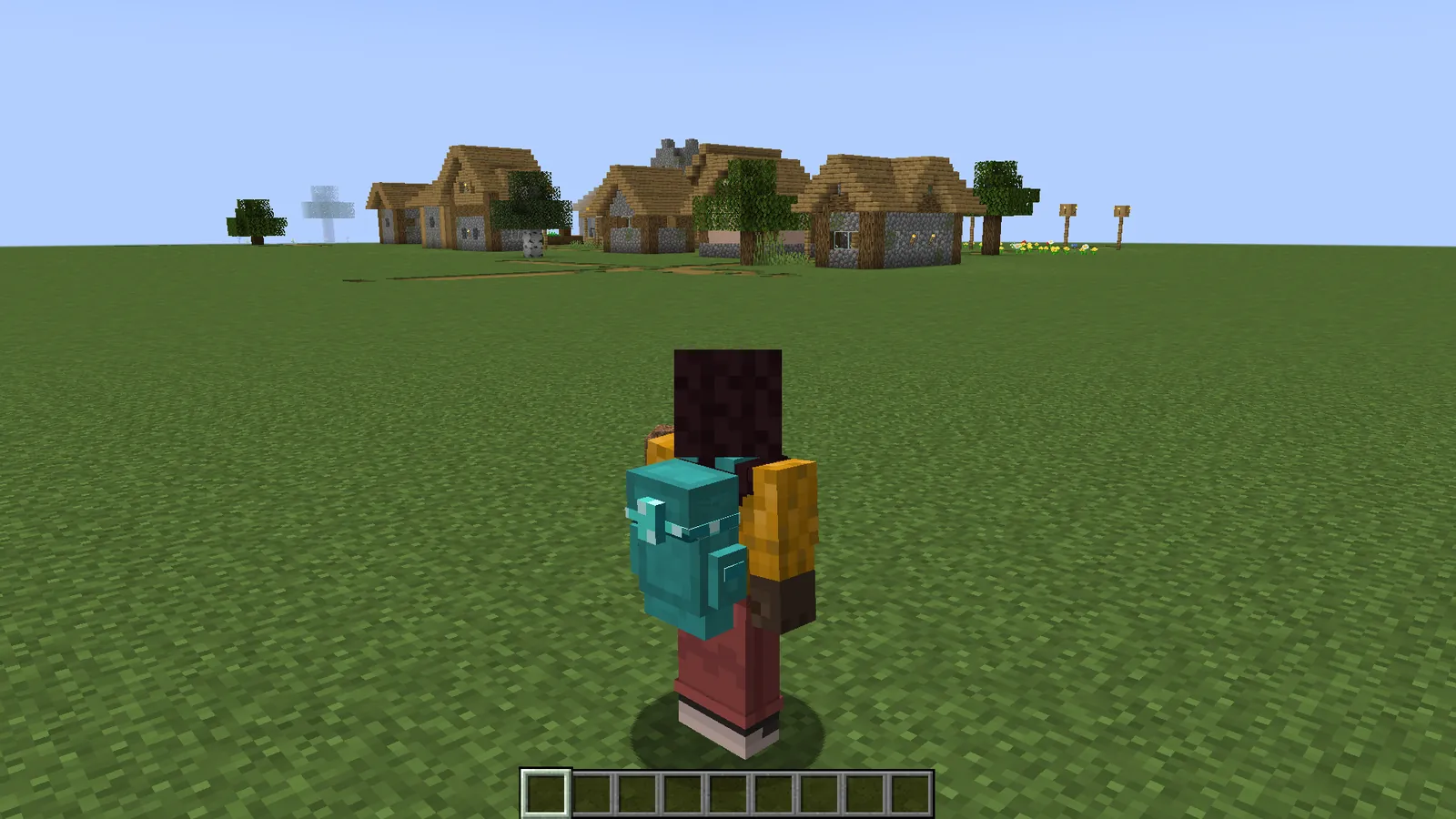
Five tiers, from leather with 18 slots to netherite with 72, each with its own metal fittings on the 3D model. (Composite of five in-game shots.)
Any dye in the crafting grid colours the backpack; the buckles keep the tier's metal. (Composite of in-game shots.)
Diamond backpack: 54 slots, three upgrade slots, and a pickup filter set to block cobblestone, dirt and gravel.
Netherite backpack: 72 slots in a 12 by 6 grid, with all three upgrades installed.
Gold backpack with an allow list: only diamonds, iron and gold are picked up.
Iron backpack, 27 slots.
Leather backpack, 18 slots, one upgrade slot.
Upgrades are real items with their own tooltip.
Seen from the front, the straps run over the shoulders and follow the body.
The same backpack on NeoForge, captured on a NeoForge client and server.
Dyed purple on NeoForge.
Tested on Fabric and NeoForge servers and clients, Minecraft 1.21.1. All images are real captures from a headless modded client in a demo world.
StaffPanel
An admin panel inside Minecraft: moderate, monitor and handle reports from one menu.
One command opens a control room made of chest menus: players, a live server monitor with a TPS chart built from glass panes, reports, punishments, staff mode and an audit log. Staff mode stores your inventory on disk before it swaps in the tools, and a test kills the server in the middle of it to prove nothing is lost or duplicated. A sandbox lets anybody try the whole panel against made-up players.
Java 21, Paper 1.20.6 to 1.21.x and Folia, SQLite or MariaDB, PlaceholderAPI. MIT licence.
The control room: one tile per area, with live numbers in the tooltips.
Online players as heads with ping, playtime, world and flags.
A player profile: teleport, spectate, freeze, heal, inspect, notes, history, punish.
Looking into an inventory. Edit mode swaps items atomically and writes every change to the audit log.
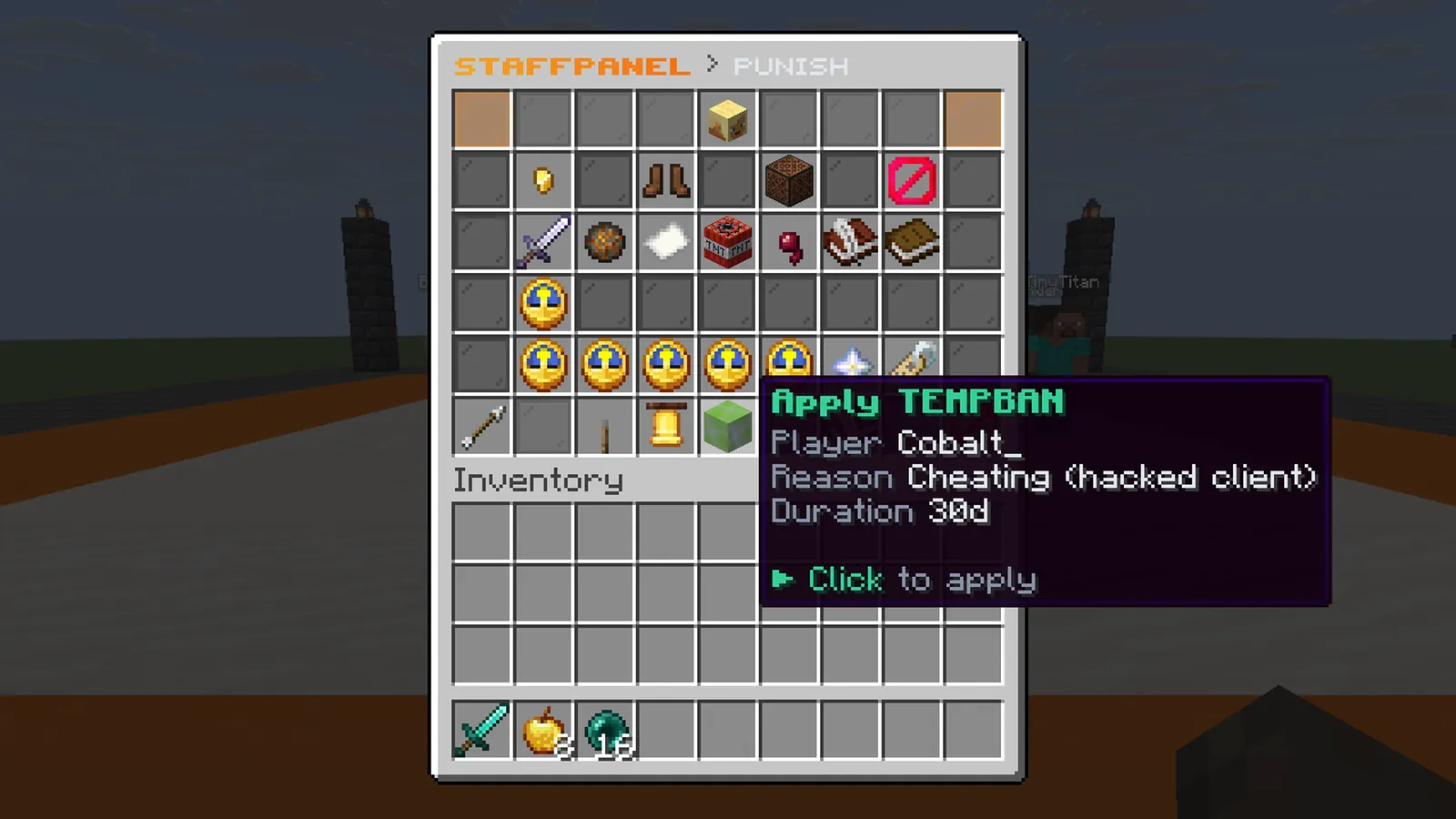
The punishment wizard: type, reason template, duration, then confirm.
Punishment history, colour coded: red ban, orange mute, yellow warning, blue kick, grey finished.
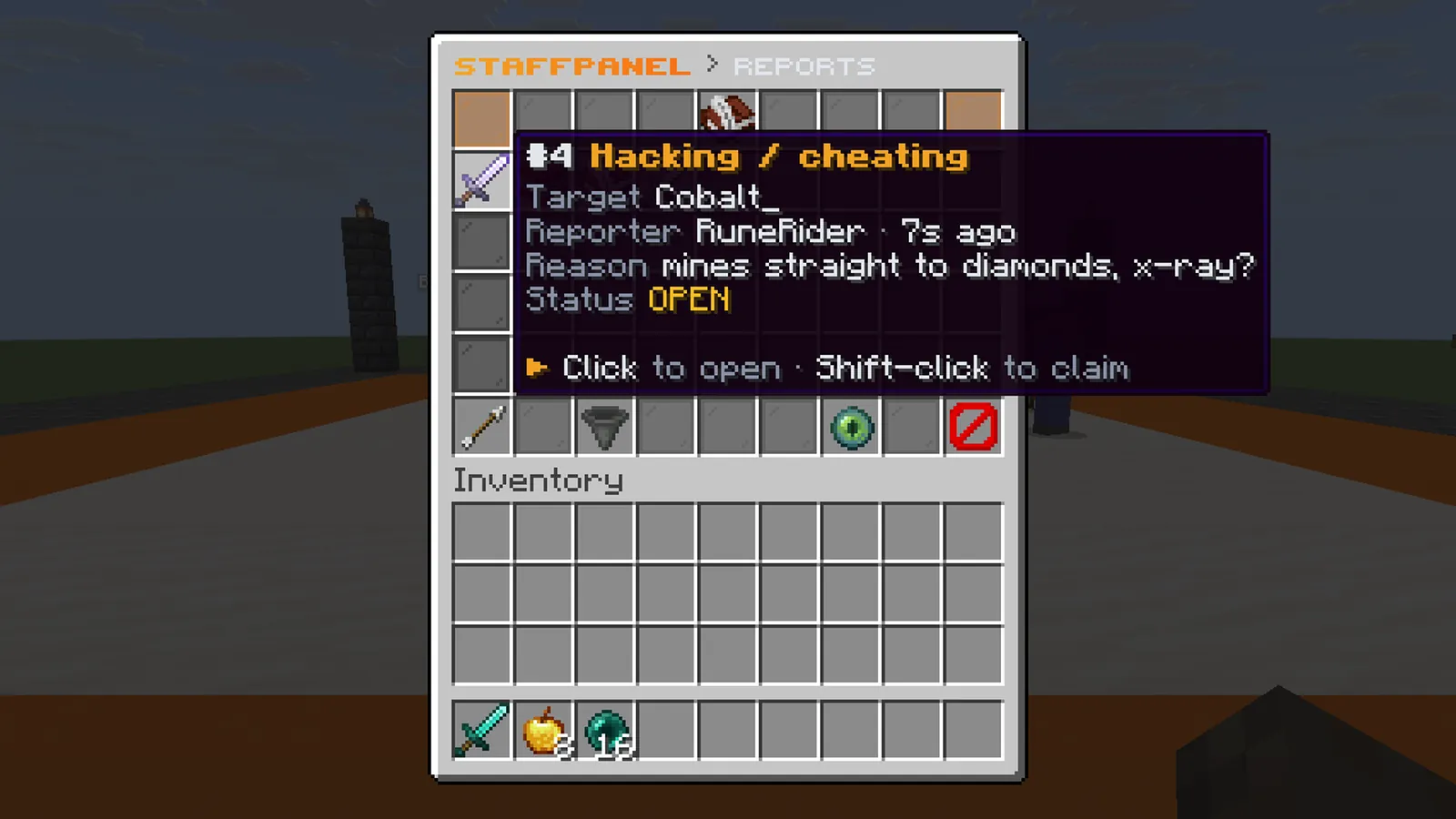
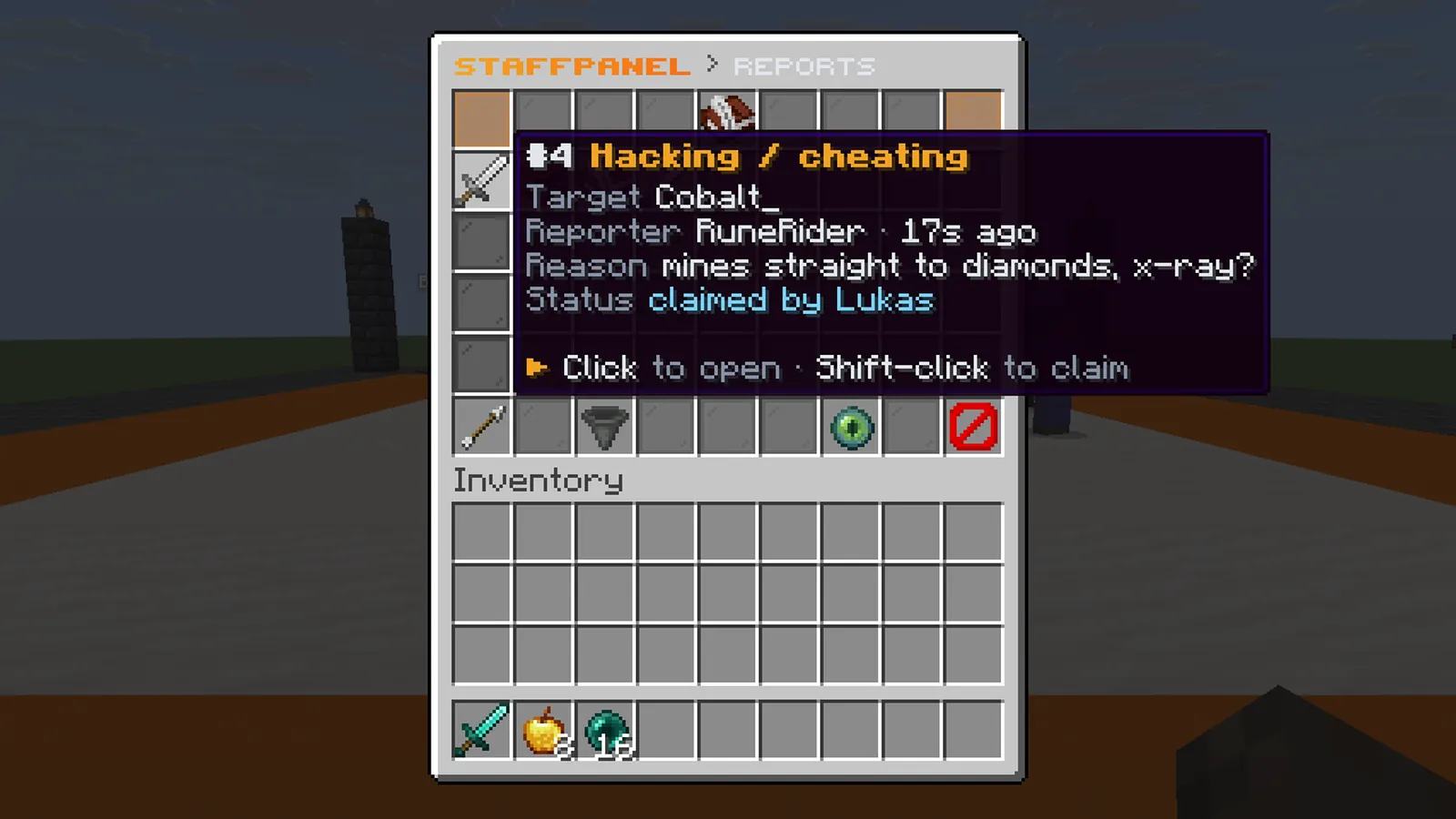
The reports inbox with filters. Click opens a report, Shift-click claims it.
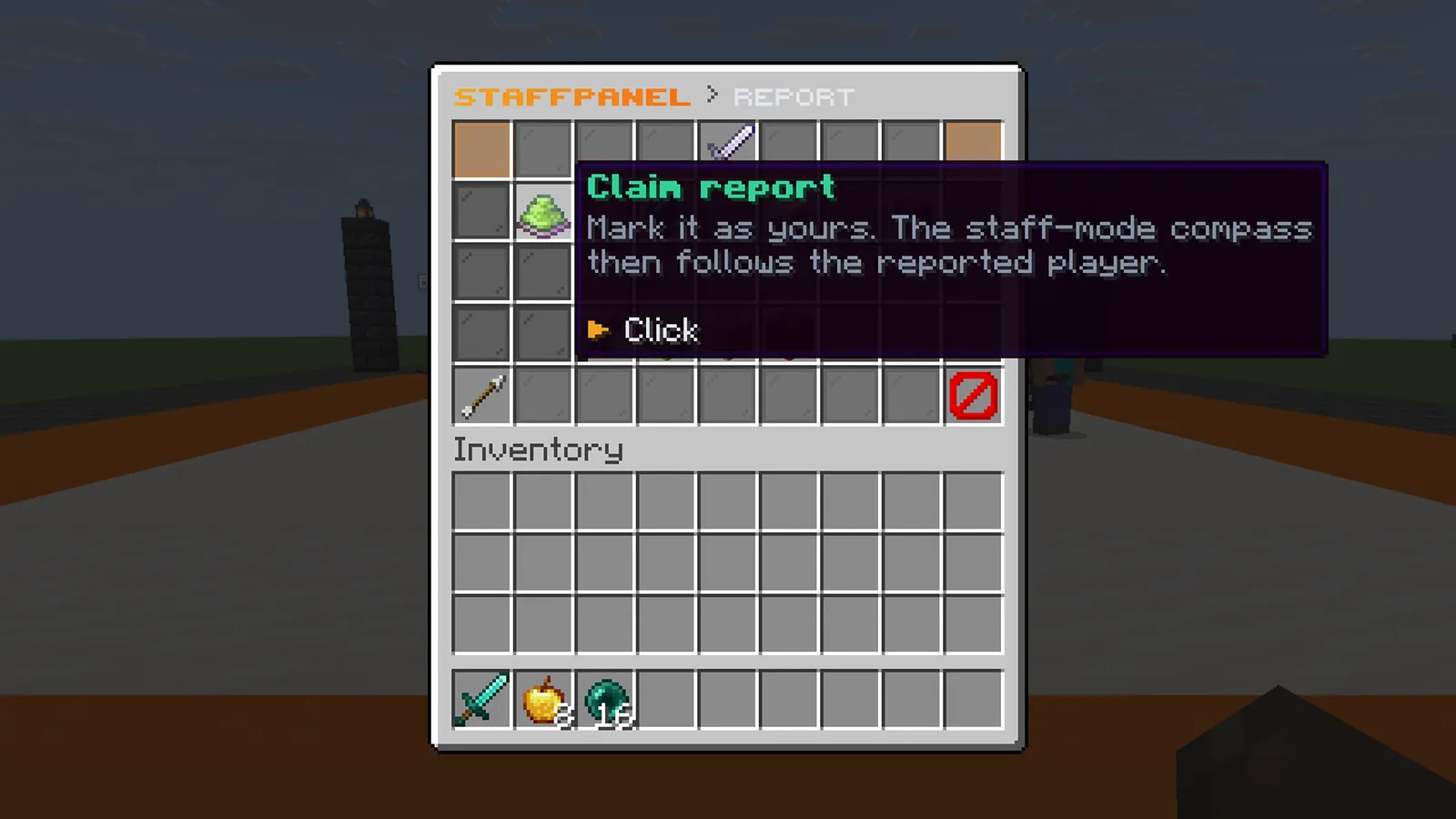
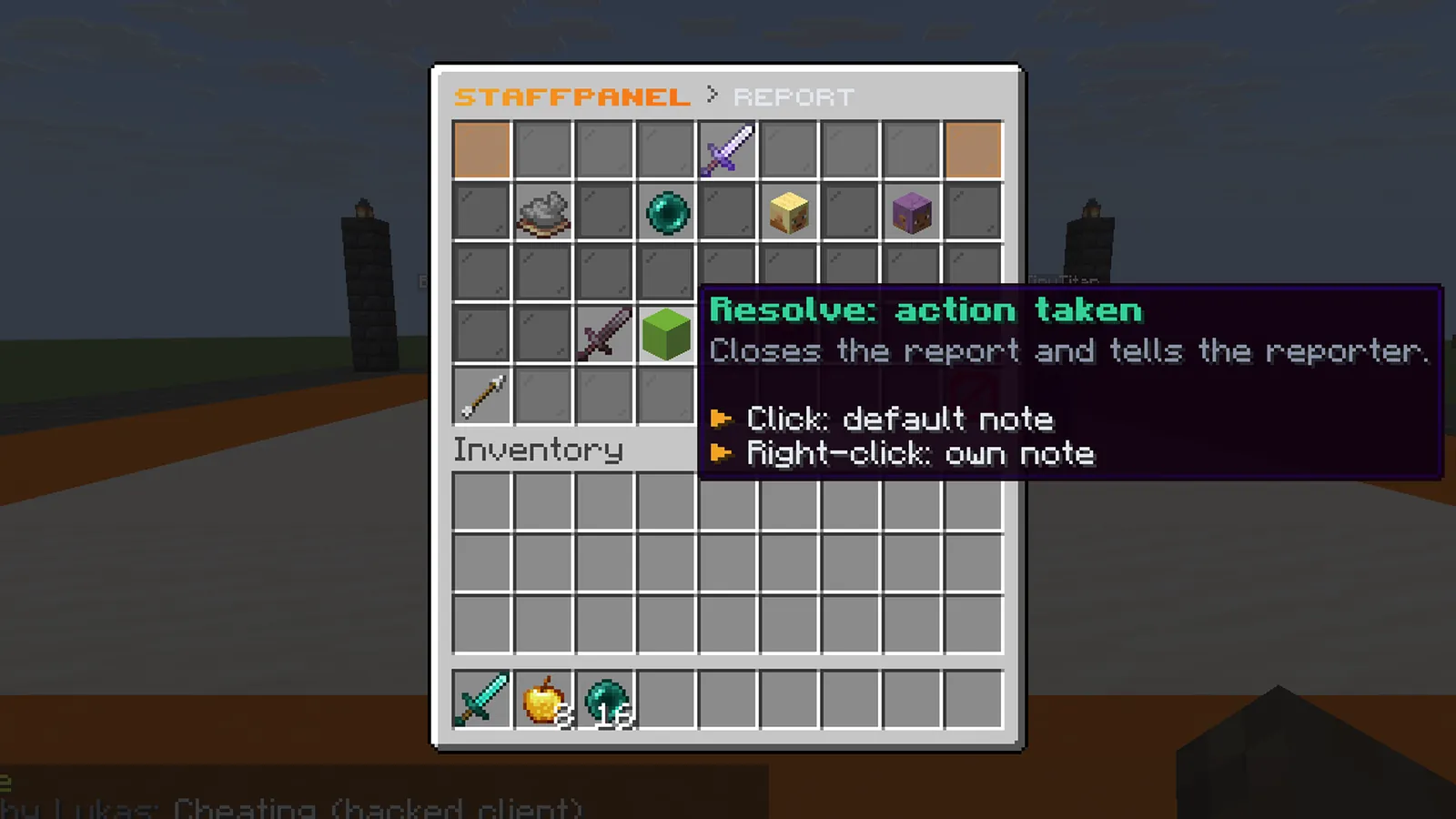
One report: claim, go to the reported player, punish, resolve as action taken, no violation or false report.
The server monitor: TPS history as a chart of glass panes, heap gauge in the top row.
The laggiest chunks by entities and block entities. A click teleports there.
Staff mode: the hotbar tools. The real inventory waits safely on disk.
What a frozen player sees: a full-screen title. Logging out while frozen is punished.
A new report: chat line with clickable Claim and Open buttons, action bar message and a sound.
The demo sandbox: the same panel with made-up players, safe on a public server.
In the sandbox a ban only shows what the player would see. Nobody real is touched.
A simulated report arrives with the same clickable notification as on a real server.
Tested with bots on Paper 1.20.6 and 1.21.10 (SQLite and MariaDB) and on Folia 1.21.8, plus unit tests. All images are real captures from a headless Minecraft client with demo data.
Fortuna
Crates, keys and a lottery for Paper and Folia. The odds are always shown, and a key can only be spent once.
Turn any block into a crate with a hologram and a spinning 3D model; every crate can have its own key, colours, particles and sounds (the three bundled ones are an explorer, an arcane and a forge crate). Players preview every reward with its real chance, then open it with a key: a roulette in the style of CS, a wheel of items around the crate, or instantly. Rarity tiers, pity protection, statistics and an in-game editor for the weights come with it. The lottery draws every few minutes, hours or days, rolls the jackpot over, stages a draw ceremony and pays winners even when they are offline. A key is spent exactly once, however fast somebody clicks, copies the item or disconnects, and a test kills the server in the middle of an opening to prove the reward still arrives exactly once. A live demo lets anybody try all three crates and the lottery with demo coins.
Java 21, Paper 1.20.6 to 1.21.x and Folia, SQLite or MariaDB, Vault, PlaceholderAPI. MIT licence.
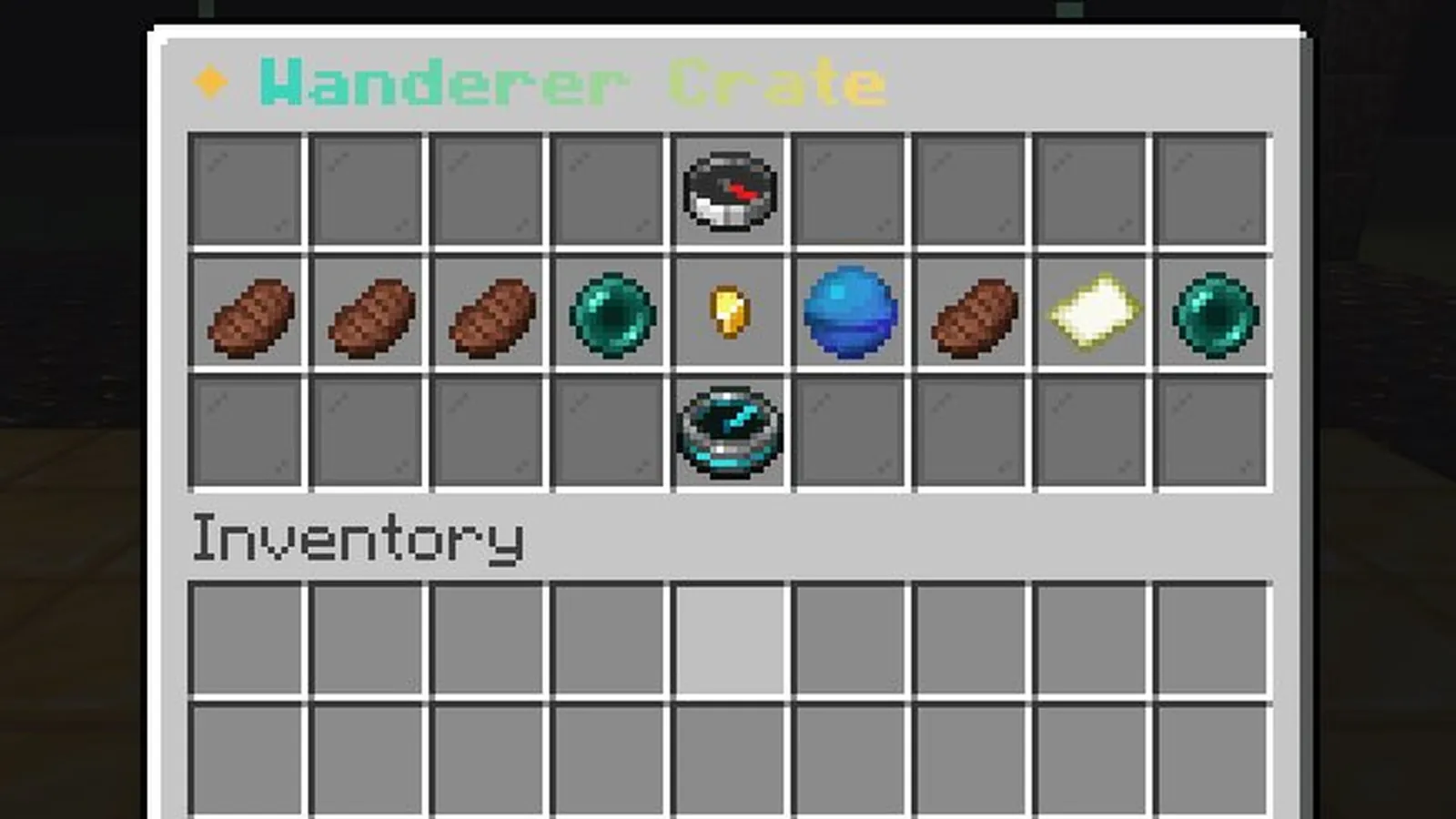
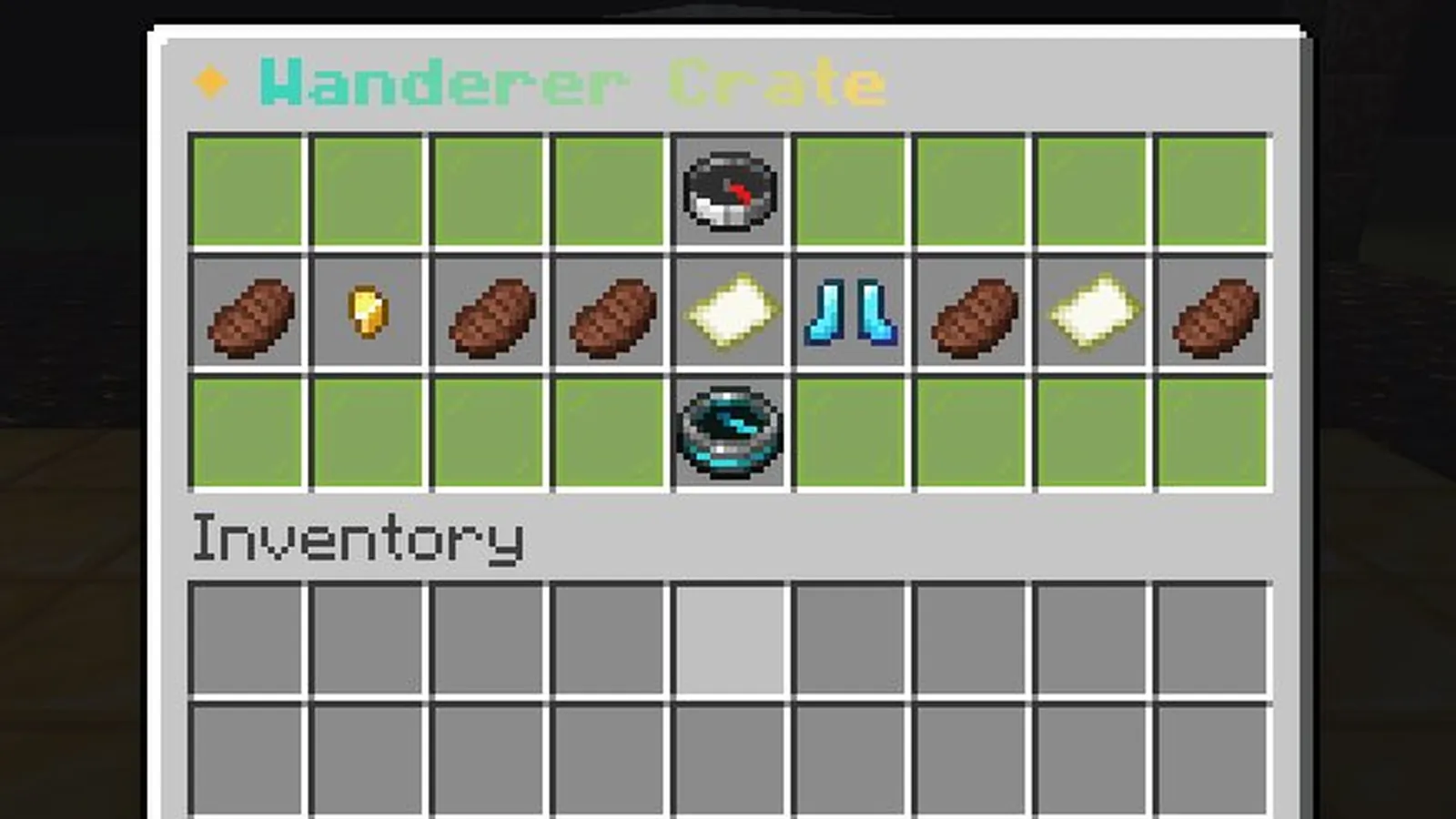
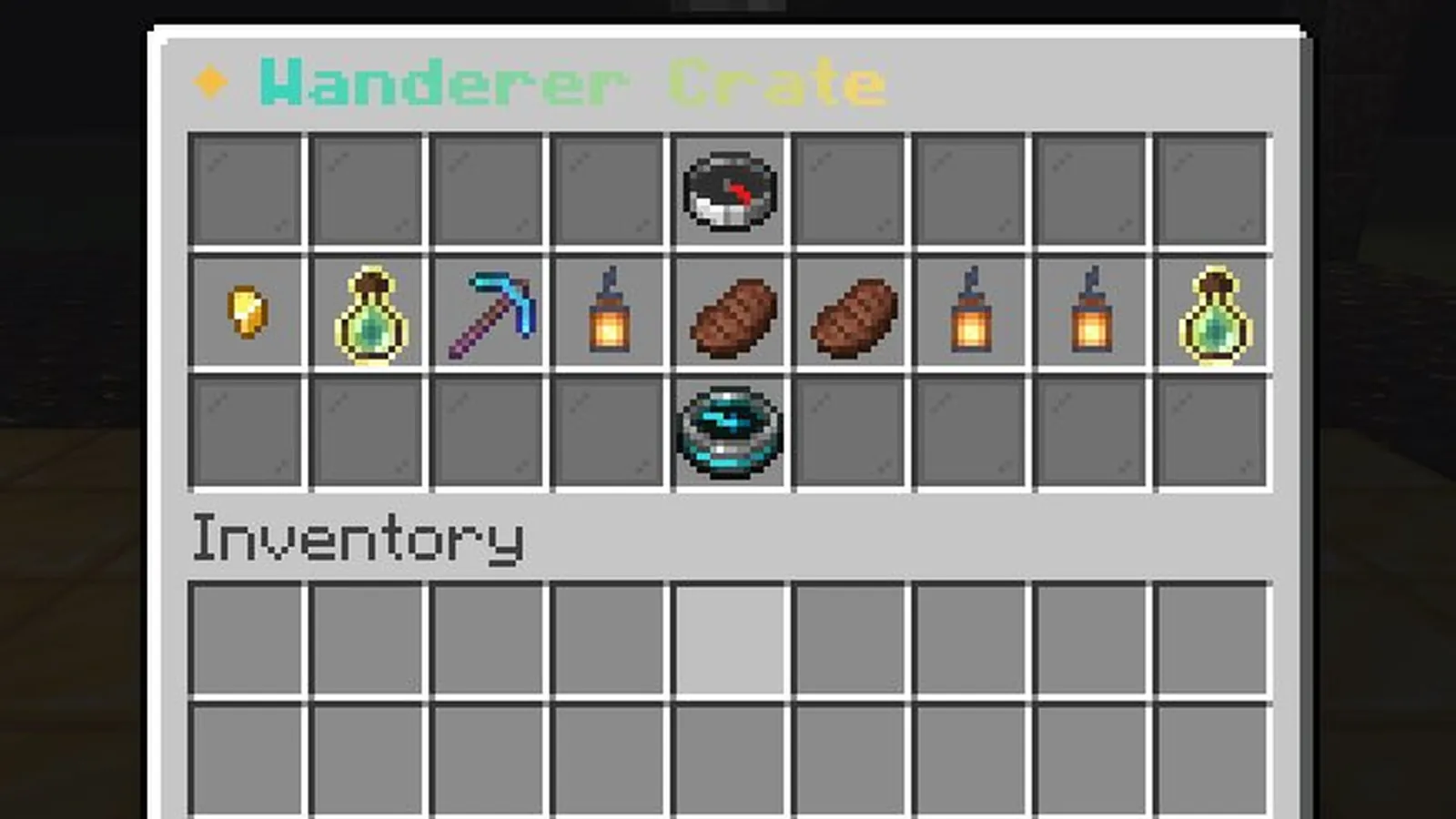
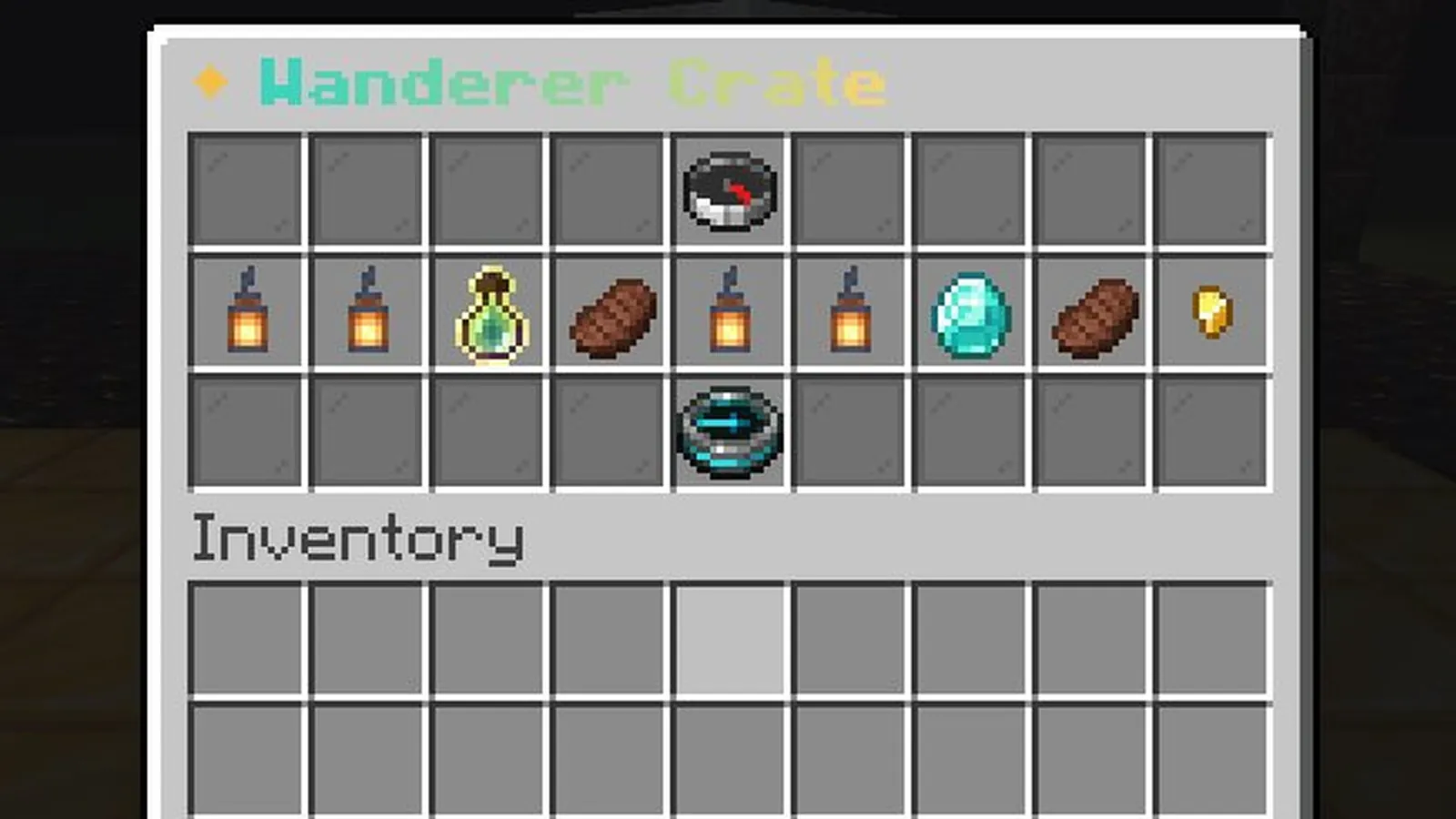
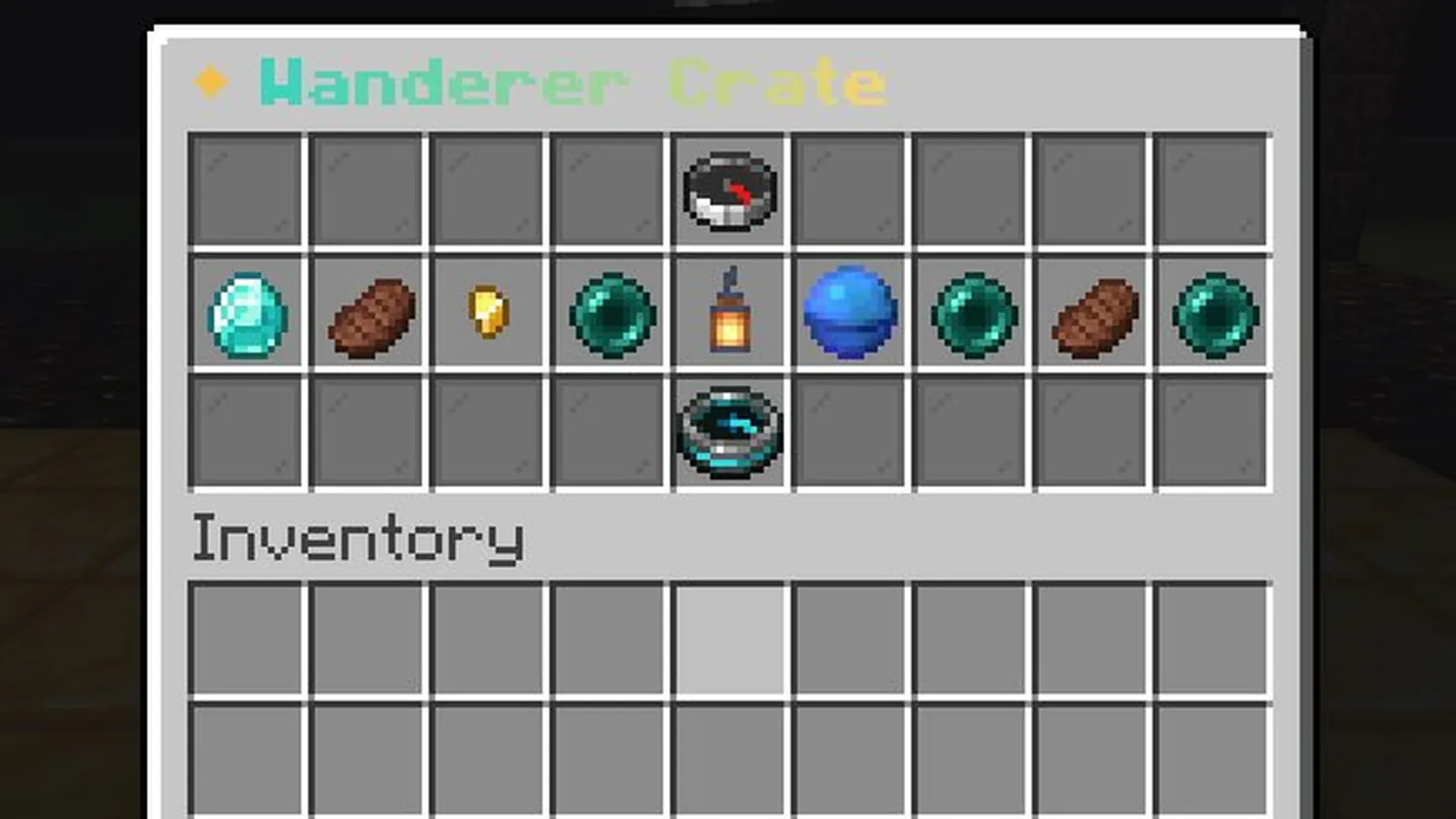
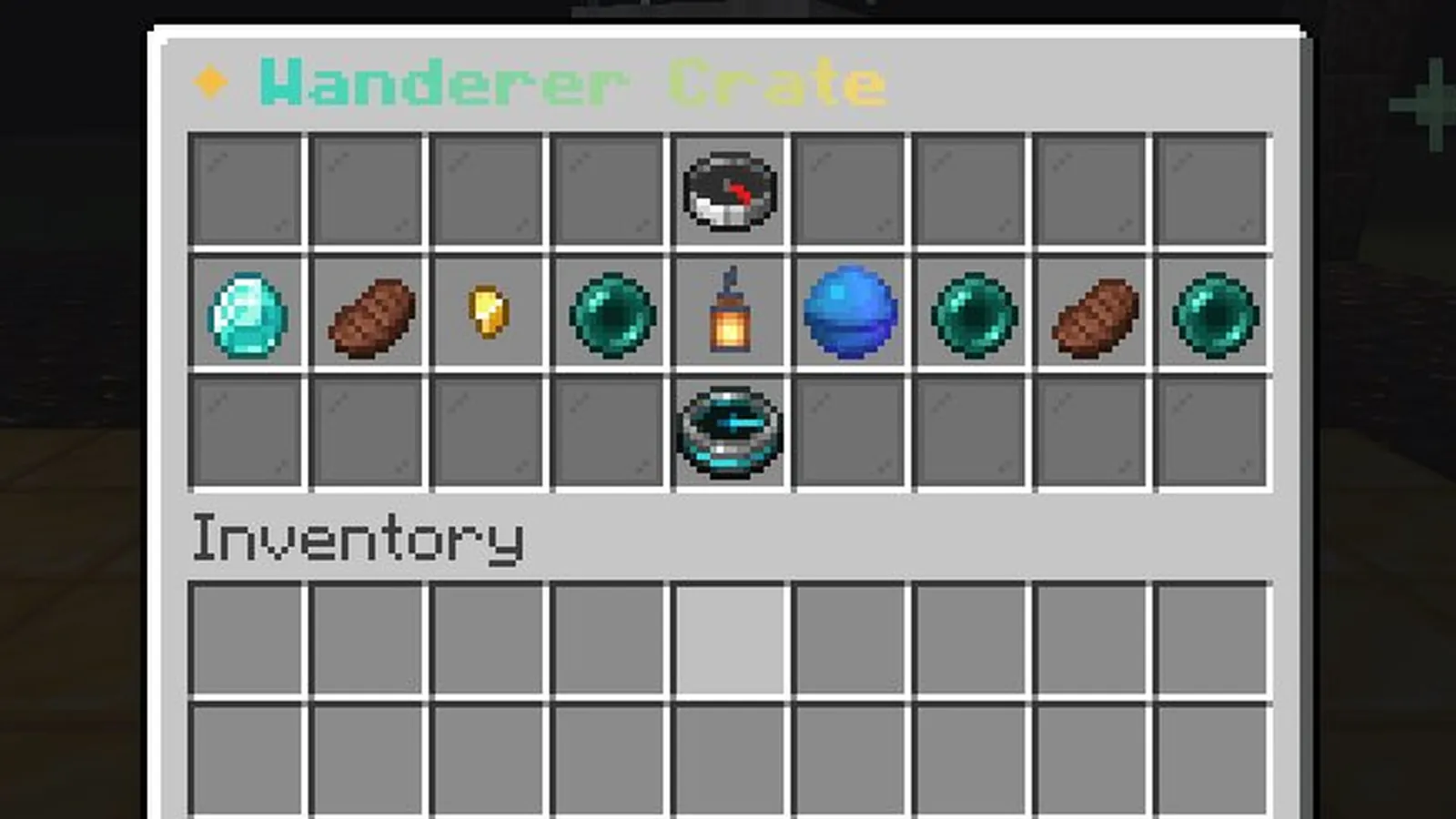
Three crates, three identities: Ember (forge), Fortune (arcane) and Wanderer (explorer)
Instant crates pop the prize out of the furnace, with title and server broadcast
The Wanderer crate: lodestone and compass model, tagline and trail glitter
The Wanderer roulette scrolls under compass pointers
The Ember crate: magma core, orbiting fire charges, flames and lava pops
Every crate has its own frame colour in the preview
Every reward with its real chance, rarest first, in the colours of the crate
The spin wheel: rewards orbit the crate and stop in front of the player
The lottery hub with countdown, pool and your own odds
The draw ceremony names the winner for everybody
Change weights in game, the odds update live and save to the file
Per-player statistics
German texts are included
Built for in-game currency and earned keys only. There is no real-money or Tebex link, because selling randomised rewards for money breaks Minecraft's usage guidelines. Tested with 59 unit tests and 110 bot checks on Paper 1.20.6 and 1.21.10 (SQLite and MariaDB), plus a Folia 1.21.8 smoke test. All images are real captures from a headless Minecraft client with demo data.
A survival server, rebuilt
I rewrote the plugin suite of a private survival server and tested every change with bots before it went live.
Async MySQL with proper money types, fixes for the exploits players had found, homes, back and tpa, death chests, a sleep vote, NPCs, and weekly and team quests. It ran on a staging copy of the server first.
Paper, MySQL, Vault and PlaceholderAPI. The source is private.
RPG skill trees with six skills, passive perks and live unlock tooltips.
Pet system with 30 pet types, rarities from Common to Mythic, levels, evolutions and abilities.
Daily quest board with progress bars, item/XP/money rewards and completion states.
Custom enchantment browser with max levels, applicable gear and where to obtain them.
Interactive spawn NPCs: Quest Giver, Merchant, Banker, Blacksmith and Daily Rewards.
Death chest with owner protection countdown, so nothing gets lost on death.
Sleep vote: a percentage of sleeping players skips the night, shown live in the action bar.
Player-to-player economy and clickable teleport requests with a sidebar scoreboard.
Main menu GUI.
Homes menu and scoreboard.
Tab list with player levels and deaths.
More projects
-
Modded RPG server
A NeoForge server with classes, more than 90 abilities, missions and bosses with several phases.
Abilities are checked on the server, missions (waves, escorts, hold zones) are data-driven, bosses use animated GeckoLib models, and the world generation is my own. More than 500 automated tests.
-
My own Proxmox host
More than 15 VMs for game servers, mail, Git and monitoring, backed up off-site every night.
Pterodactyl for the game servers, Git with CI/CD, Grafana with alerts, and this website. It is the same setup I build for clients.
-
FiveM scripts
Two free FiveM resources, a job center and a HUD, plus interface work for a roleplay server.
MIT licence, with downloads. ESX, QBox, QBCore or standalone.
See the scripts -
pve-change-trail
A change log for Proxmox: who changed what in your cluster, and when.
Open source, written in Python.
View on GitHub -
A German network, about 70 players
For two years I looked after the tech of a German Minecraft network, including a webshop I built for it.
The shop noticeably increased how active players were on the server.
Planning something similar?